
 Early natural philosophers held that life on the earth is fundamentally dichotomous: all living things are either animals or plants. When microorganisms were discovered, they were divided in the same way. The large and motile ones were considered to be animals and the ones that appeared not to move, including the bacteria, were considered to be plants. As understanding of the microscopic world advanced it became apparent that a simple twofold classification would not suffice, and so additional categories were introduced: fungi, protozoa and bacteria. Ultimately, however, a new simplification took hold. It seemed that life might be dichotomous after all, but at a deeper level, namely in the structure of the living cell. All cells appeared to belong to one or the other of two groups: the eukaryotes, which are cells with a well-formed nucleus, and the prokaryotes, which do not have such a nucleus. Multicellular plants and animals are eukaryotic and so are many unicellular organisms. The only prokaryotes are the bacteria (including the cyanobacteria, which were formerly called blue-green algae).
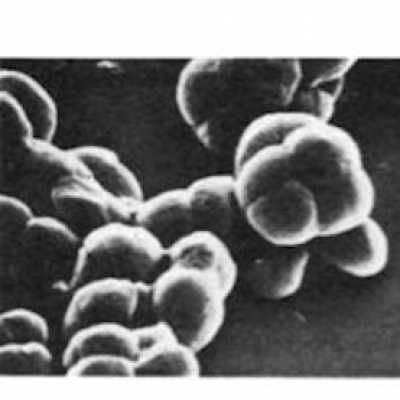
In the past few years my colleagues and I have been led to propose a fundamental revision of this picture. Among the bacteria we have found a group of organisms that do not seem to belong to either of the basic categories. The organisms we have been studying are prokaryotic in the sense that they do not have a nucleus, and indeed outwardly they look much like ordinary bacteria. In their biochemistry, however, and in the structure of certain large molecules, they are as different from other prokaryotes as they are from eukaryotes. Phylogenetically they are neither prokaryotes nor eukaryotes. They make up a new “primary kingdom,” with a completely different status in the history and the natural order of life.
We have named these organisms archaebacteria. The name reflects an untested conjecture about their evolutionary status. The phylogenetic evidence suggests that the archaebacteria are at least as old as the other major groups. Moreover, some of the archaebacteria have a form of metabolism that seems particularly well suited to the conditions believed to have prevailed in the early history of life on the earth. Hence it seems possible that the newest group of organisms is actually the oldest.
The earth is four and a half billion years old, and on the basis of the macroscopic fossil record it would appear to have been inhabited for less than a seventh of that time: the entire evolutionary progression from the most ancient marine forms to man spans only 600 million years. The fossil imprints of unicellular organisms too small to be seen with the unaided eye tell a different story. Microfossils of bacteria in particular are plentiful in sediments of all ages; they have been found in the oldest intact sedimentary rocks known, 3.5-billion year-old deposits in Australia. Over an enormous expanse of time, during which no higher forms existed, the bacteria arose and radiated to form a wide variety of types inhabiting a great many ecological niches. This age of microorganisms is the most important period in evolutionary history not only because of its duration but also because of the nature of the evolutionary events that took place over those billions of years.
( via scientificamerican.com )