
The near-death experience reported by cardiac arrest survivors worldwide may be grounded in science, according to research at the University of Michigan Health System.
Whether and how the dying brain is capable of generating conscious activity has been vigorously debated.
But in this week’s PNAS Early Edition, a U-M study showed shortly after clinical death, in which the heart stops beating and blood stops flowing to the brain, rats display brain activity patterns characteristic of conscious perception.
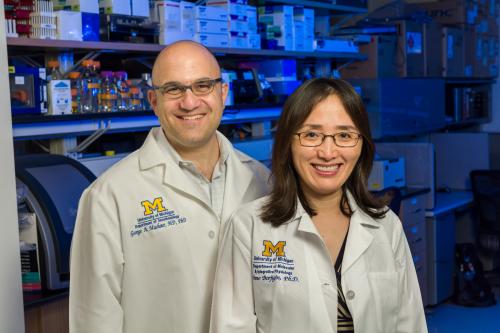
“This study, performed in animals, is the first dealing with what happens to the neurophysiological state of the dying brain,” says lead study author Jimo Borjigin, Ph.D., associate professor of molecular and integrative physiology and associate professor of neurology at the University of Michigan Medical School.
“It will form the foundation for future human studies investigating mental experiences occurring in the dying brain, including seeing light during cardiac arrest,” she says.
Approximately 20 percent of cardiac arrest survivors report having had a near-death experience during clinical death. These visions and perceptions have been called “realer than real,” according to previous research, but it remains unclear whether the brain is capable of such activity after cardiac arrest.
“We reasoned that if near-death experience stems from brain activity, neural correlates of consciousness should be identifiable in humans or animals even after the cessation of cerebral blood flow,” she says.
Researchers analyzed the recordings of brain activity called electroencephalograms (EEGs) from nine anesthetized rats undergoing experimentally induced cardiac arrest.
Within the first 30 seconds after cardiac arrest, all of the rats displayed a widespread, transient surge of highly synchronized brain activity that had features associated with a highly aroused brain.
Furthermore, the authors observed nearly identical patterns in the dying brains of rats undergoing asphyxiation.