
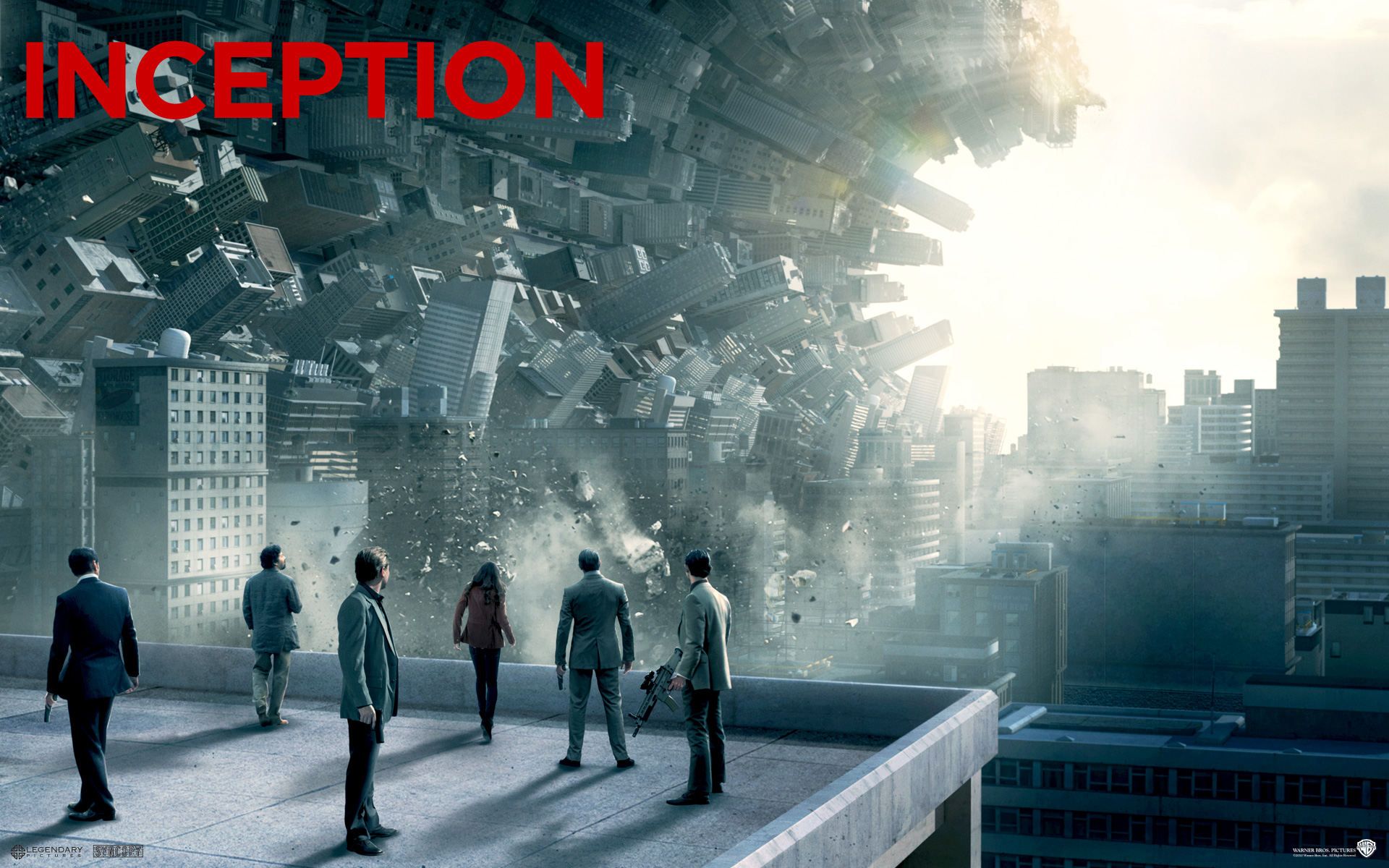
Since watching the movie Inception; I have been fascinated with the idea of this ‘dream within a dream’ and the other theories about dreaming.. In one of my earlier posts; I said that Hollywood creates our reality.. I think this is 100% true because where do people get these ideas from? And within a couple months after the movie; science-fiction becomes reality! Below is some information which suggests that dreams can be altered by your subconscious mind..
What are Dreams?

Dreams are successions of images, ideas, emotions and sensations occurring involuntarily in the mind during certain stages of sleep. The content and purpose of dreams are not yet understood, though they have been a topic of speculation and interest throughout recorded history. The scientific study of dreams is known as oneirology.
Visuals
The visual nature of dreams is generally highly phantasmagoric; that is, different locations and objects continuously blend into each other. The visuals (including locations, characters/people, objects/artifacts) are generally reflective of a person’s memories and experiences, but often take on highly exaggerated and bizarre forms.
Emotions
The most common emotion experienced in dreams is anxiety. Other emotions include abandonment, anger, fear, joy, happiness, etc. Negative emotions are much more common than positive ones.
Sexual themes
The Hall data analysis shows that sexual dreams occur no more than 10% of the time and are more prevalent in young to mid-teens. Another study showed that 8% of men’s and women’s dreams have sexual content. In some cases, sexual dreams may result in orgasms or nocturnal emissions. These are colloquially known as wet dreams.
Recurring dreams
While the content of most dreams is dreamt only once, many people experience recurring dreams—that is, the same dream narrative or dreamscape is experienced over different occasions of sleep.
Color vs. black and white
A small minority of people say that they dream only in black and white.
Inception: A True Story?
Lucid Dreaming
Lucid dreaming is the conscious perception of one’s state while dreaming. In this state a person usually has control over characters and the environment of the dream as well as the dreamer’s own actions within the dream.
Dreams of absent-minded transgression
Dreams of absent-minded transgression (DAMT) are dreams wherein the dreamer absentmindedly performs an action that he or she has been trying to stop (one classic example is of a quitting smoker having dreams of lighting a cigarette). Subjects who have had DAMT have reported waking with intense feelings of guilt. One study found a positive association between having these dreams and successfully stopping the behavior.
The “dream world” and the “real world”
During the night there may be many external stimuli bombarding the senses, but the brain often interprets the stimulus and makes it a part of a dream in order to ensure continued sleep. Dream incorporation is a phenomenon whereby an actual sensation, such as environmental sounds, are incorporated into dreams, such as hearing a phone ringing in a dream while it is ringing in reality or dreaming of urination while wetting the bed. The mind can, however, awaken an individual if they are in danger or if trained to respond to certain sounds, such as a baby crying. Except in the case of lucid dreaming, people dream without being aware that they are doing so. Some philosophers have concluded that what we think of as the “real world” could be or is an illusion (an idea known as the skeptical hypothesis about ontology). There is a famous painting by Salvador Dalí that depicts this concept, titled “Dream Caused by the Flight of a Bee around a Pomegranate a Second Before Awakening” (1944). The first recorded mention of the idea was by Zhuangzi, and is also discussed in Hinduism which makes extensive use of the argument in its writings. It was formally introduced to Western philosophy by Descartes in the 17th century in his Meditations on First Philosophy. Stimulus, usually an auditory one, becomes a part of a dream, eventually then awakening the dreamer. The term “dream incorporation” is also used in research examining the degree to which preceding daytime events become elements of dreams. Recent studies suggest that events in the day immediately preceding, and those about a week before, have the most influence.
Apparent precognition
According to surveys, it is common for people to feel their dreams are predicting subsequent life events. Psychologists have explained these experiences in terms of memory biases, namely a selective memory for accurate predictions and distorted memory so that dreams are retrospectively fitted onto life experiences. The multi-faceted nature of dreams makes it easy to find connections between dream content and real events.
The Mysteries of The Brain
Dreams are not complete understood, still to this day… Many people believe they are reflections of the subconscious.. They could be spiritual messages from god, messages from the deceased or predictions of the future… During a typical lifespan, a person spends a total of about six years dreaming! Most dreams only last 5 to 20 minutes. It is unknown where in the brain dreams originate, if there is a single origin for dreams or if multiple portions of the brain are involved, or what the purpose of dreaming is for the body or mind. It’s said that dreams regulate stress, mood, emotions in repressed parts of the mind..
I found ‘False-Awakening’ interesting: It’s a vivid dream about awakening from sleep. After a false awakening, subjects often dream they are performing daily morning rituals such as cooking, cleaning and eating. The experience is sometimes called a double dream, or a dream within a dream. Doesn’t that sound like Inception?
One in Ten people claim they have experienced a Out of Body Experience while dreaming. It’s the sensation of floating outside of one’s body and, in some cases, perceiving one’s physical body from a place outside one’s body.. You can also use these simple steps called Reality Checking to determine if your dreaming or not..
-Looking at text or one’s digital watch (remembering the words or the time), looking away, and looking back. The text or time will probably have changed randomly and radically at the second glance or contain strange letters and characters. (Analog watches do not usually change in dreams, while text and digital watches have a great tendency to do so.)
-Flipping a light switch. Light levels rarely change as a result of the switch flipping in dreams.
-Looking into a mirror; in dreams, reflections from a mirror often appear to be blurred, distorted, incorrect, or frightening.
-Looking at the ground beneath one’s feet or at one’s hands. If one does this within a dream the difference in appearance of the ground or one’s hands from the normal waking state is often enough to alert the conscious to the dream state.
-Holding one’s nose and mouth closed while attempting to inhale. If dreaming, one will find themselves breathing and aware
There is a lot of interesting information about sleeping, our brain, and our reality around us.. Most of it seems like it’s right out of the movies.. (Matrix, Vanilla Sky, Inception, etc..) There is much more research that is needed about this subject but my purpose of this post is to get you thinking! Lucid dreaming is interesting and I’m going to start trying to remember my own dreams.. I also think Inception could have been a simple ‘Mind-Control’ film which targets peoples dreams without them knowing.. A lot of different people have told me that they felt sleepy after watching the movie.. Coincidence? Well the director; Christopher Nolan has been producing ‘mind-fuck’ movies including Memento.. So what is his goal? We know the TPTB is trying to control us by using many different methods but movies and TV seem to be the best choice.. Is it all a conspiracy? We may never know the real answer but don’t become a complete victim! Set up mental blocks inside so it’s harder for the ‘extractors’ to steal your thoughts and embed it with new ideas!
Links and Videos
Is INCEPTION Dream Hypnosis ? Part 1
Above is only a little bit of information which could be found by searching on YouTube and Google.. I know sometimes I don’t remember my dreams but everyone should start writing down it in a journal. We could compare dreams and see if our minds are trying to ‘tell’ us something.. Who knows, we could maybe predict the next doomsday event or something else! If you would like to send me your dream or any other information please email me at tips@usahitman.com