
 Donna Anderson
Infowars.com
You can stop worrying now. A new study indicates that children who have Attention Deficit Hyperactivity Disorder (ADHD) and take stimulants such as Ritalin and Adderall feel the drugs are beneficial and do not turn them into “zombies” or “robots” as many proponents of the drugs assume.
In a first-of-its-kind study, researchers went straight to the horse’s mouth for answers. Instead of assuming that children preferred to be doped up during the school day they actually asked them how they felt about their treatment and its effects.
The study, led by Ilina Singh, a biomedical ethicist from King’s College London was conducted by medical charity Wellcome Trust. Children from 151 families in the United States and Britain were interviewed.
According to Singh, “ADHD is a very emotive subject which inspires passionate debate. Everyone seems to have an opinion about the condition, what causes it, how to deal with children with ADHD, but the voices of these children are rarely listened to. Who better to tell us what ADHD is like and how medication affects them than the children themselves?”
An 11-year-old girl named Angie was quoted for the report. Angie said, “With medication, it’s not that you’re a different person. You’re still the same person, but you just act a little better.”
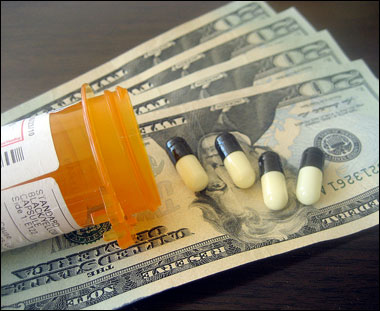
High school students seem to agree. A June 2012 New York Times article reported on the increased usage of anti-psychotic medications among high school students. Under immense pressure to perform so they could earn college scholarships, many high school students won’t even enter the classroom without first popping or snorting a Ritalin pill and since not all of them have been diagnosed with the disorder, many are buying the pills from other students who have.
“They’re the A students, sometimes the B students, who are trying to get good grades,” said one senior at Lower Merion High School in Ardmore, a Philadelphia suburb, who said he makes hundreds of dollars a week selling prescription drugs, usually priced at $5 to $20 per pill, to classmates as young as freshmen. “They’re the quote-unquote good kids, basically.”
Physicians are seeing perfectly healthy children as young as 12-years old ask for a prescription for Ritalin or Adderall because the want to improve their grades.
But now, children from poor families are being prescribed anti-psychotic drugs to give them an advantage in school. The practice is most prevalent in poorer rural areas where limited funding means there’s no access to alternative therapies such as talk therapies or school counselors.
And because parents who can afford to put their kids on these anti-psychotics do so at the drop of a hat, the poorer children are at a disadvantage in the classrooms. So to level the playing field, Medicaid picks up the check for their drug habit, too.
Timothy Leary (October 22, 1920-May 31, 1996) was an American psychologist, known for his controversial views on the benefits of psychedelic drugs like LSD. You may remember one of his pearls of wisdom: “There are three side effects of acid: enhanced long-term memory, decreased short term memory, and I forget the third.”
It might surprise you to know that the ingredients in Adderall and Vyvanse (amphetamines) and Ritalin and Focalin (Methylphenidates) are categorized by the Drug Enforcement Agency as Class 2 Controlled Substances, right alongside LSD.
So is it really any wonder that children enjoy taking these drugs? Of course not. If mind-altering drugs made you feel bad nobody would ever become addicted. And that’s exactly what these are – addictive drugs. Drugs that eventually wear off making the body crave more and more just to get through the day.
Even though the doped up children of 151 families seemed to be happy with the results, they’re hardly a fair representation. Currently, 9 percent of US children between the ages of five and 17, and 5 to 10 percent of children and adolescents in the UK have been “diagnosed” with ADHD so they can legally be put on these drugs regimens.
Twenty-five years ago it started with a few hard-to-handle boys, and now we’ve progressed to prescribing these drugs on the grounds that poor students in poor school districts need to be doped up to level the playing field. There’s actually a black market for ADHD drugs for elementary school kids and it carries on all the way through college. What next?
How long before Big Pharma and the FDA have us convinced we need to start lacing baby formula with amphetamines? Sound far-fetched? Not really. .Children as young as 3 and 4 years of age are already being doped up to control their ADHD Soon they’ll be sending a bottle of pills home with your New Baby kit when you bring your baby home from the hospital.