
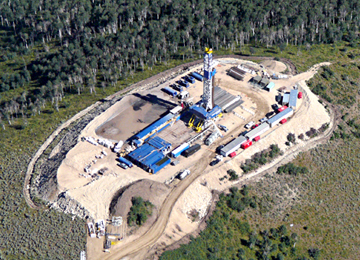
 The U.S. Department of the Interior’s Bureau of Land Management (BLM) proposed an updated set of rules governing hydraulic fracturing, on public lands today. The controversial oil and gas development technique—in which drillers blast millions of gallons of chemically treated water into the earth to force oil and gas from underground deposits—has been linked to air and water pollution and public health problems.
“Comparing today’s rule governing fracking on public lands with the one proposed a year earlier, it is clear what happened: the Bureau of Land Management caved to the wealthy and powerful oil and gas industry and left the public to fend for itself,” said Jessica Ennis, legislative representative at Earthjustice.
“Our public lands—and the people who live near them—deserve the highest level of protection. Today’s rule could have set the gold standard. Instead the BLM is settling for shoddy protections peddled by the oil and gas industry.”
The updated proposal eliminates protections included in the version proposed last year and fails to include safeguards demanded by environmental and public health advocates.
Among the problems identified in the updated regulations:
- The proposed rules do not require an evaluation of the integrity of cement barriers in individual wells—the critical barrier between toxic fracking chemicals and groundwater—instead allowing oil and gas companies to test one well and allow those results to guide the development of other similar wells.
- The updated proposal does not require fracking companies to disclose chemicals before they are pumped into the ground—a critical measure that would give nearby communities time to test and monitor water supplies for any fracking-related water pollution.
“The Sierra Club is alarmed and disappointed by the fundamental inadequacy of the Bureau of Land Management’s new proposed fracking regulations,” said Michael Brune, executive director of the Sierra Club. “After reviewing the draft rules, we believe the administration is putting the American public’s health and well-being at risk, while continuing to give polluters a free ride. The draft BLM rules ignore the recommendations of the president’s own shale gas advisory committee, which called for transparency, full public chemical disclosure, environmental safeguards, and pollution monitoring.”
“Although no amount of regulation will make fracking acceptable, the proposed BLM rules fail even to take obvious steps to make it safer. This proposal does not require drillers to disclose all chemicals being used for fracking and continues to allow trade-secret exemptions for the oil and gas industry,” said Brune.
Across the country, fracking has wrought widespread environmental damage—contaminating drinking water sources and turning treasured landscapes into industrial zones. And now, the oil and gas industry has designs on key areas of America’s natural heritage, including sources of drinking water for millions of Americans:
- White River National Forest–Located in Colorado, White River is the most visited national forest in the nation. Its pristine streams also provide drinking water to nearby communities, and feeds the Colorado River.
- Delaware River basin–The basin spans New Jersey, New York, Pennsylvania and Delaware, is home to three national park areas, and provides drinking water to 15 million people.
- Wayne National Forest–Part of the beautiful Hocking Hills region in Ohio, most of the acres in the forest are to be leased for drilling near the sole drinking water source for 70,000 people.
- George Washington National Forest–this area hosts streams in Virginia and West Virginia that feed the James and Potomac Rivers, which provide the drinking water for millions of people in the metro D.C. area.
- Otero Mesa–A vital part of New Mexico’s natural heritage, Otero Mesa is home to wildlife and what is perhaps the largest untapped freshwater aquifer in this parched Southwestern state.