
By David Ferguson
Raw-Story
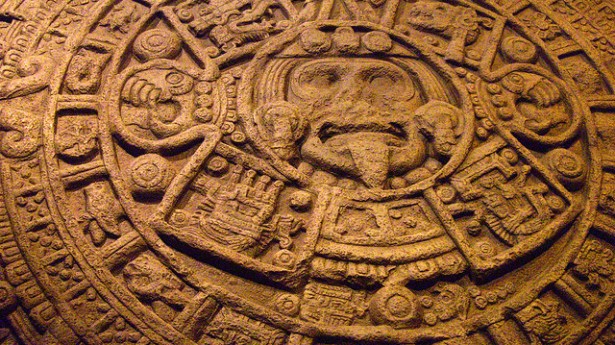
Archaeologists have discovered the ruins of an ancient Mayan city in the mountains of North Georgia believed to be at least 1,100 years old. According to Richard Thornton at Examiner.com, the ruins are reportedly what remains of a city built by Mayans fleeing wars, volcanic eruptions, droughts and famine.
In 1999, University of Georgia archeologist Mark Williams led an expedition to investigate the Kenimer Mound, a large, five-sided pyramid built in approximately 900 A.D. in the foothills of Georgia’s tallest mountain, Brasstown Bald. Many local residents has assumed for years that the pyramid was just another wooded hill, but in fact it was a structure built on an existing hill in a method common to Mayans living in Central America as well as to Southeastern Native American tribes.
Speculation has abounded for years as to what could have happened to the people who lived in the great Meso-American societies of the first century. Some historians believed that they simply died out in plagues and food shortages, but others have long speculated about the possibility of mass migration to other regions.
When evidence began to turn up of Mayan connections to the Georgia site, South African archeologist Johannes Loubser brought teams to the site who took soil samples and analyzed pottery shards which dated the site and indicated that it had been inhabited for many decades approximately 1000 years ago. The people who settled there were known as Itza Maya, a word that carried over into the Cherokee language of the region.
The city that is being uncovered there is believed to have been called Yupaha, which Spanish explorer Hernando de Soto searched for unsuccessfully in 1540. So far, archeologists have unearthed “at least 154 stone masonry walls for agricultural terraces, plus evidence of a sophisticated irrigation system and ruins of several other stone structures.” Much more may still be hidden underground.
The find is particularly relevant in that it establishes specific links between the culture of Southeastern Native Americans and ancient Mayans. According to Thornton, it may be the “most important archeological discovery in recent times.”
UPDATE: Raw Story contacted another UGA Scientist, who preferred to remain anonymous, who indicated that, while it is unlikely that the Mayan people migrated en masse from Central America to settle in what is now the United States, he refused to characterize Thornton’s conclusions as “wrong,” stating that it is entirely possible that some Mayans and their descendants migrated north, bringing Mayan building and agricultural techniques to the Southeastern U.S. as they potentially integrated with the existing indigenous people there.