
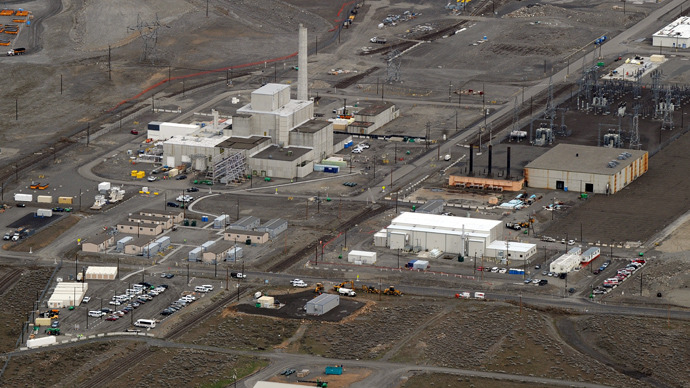
US residents near the Hanford Nuclear Reservation may be in grave danger: a nuclear safety board found that the underground tanks holding toxic, radioactive waste could explode at any minute, due to a dangerous buildup of hydrogen gas.
After Sen. Ron Wyden (D-Ore.) asked the Defense Nuclear Facilities Safety Board (DFNSB) about the risks posed by the nuclear site, board members relayed their concerns about the potential for hydrogen gas buildup within the walls of a tank – particularly those with double walls.
“All the double-shell tanks contain waste that continuously generates some flammable gas,” the board said in a letter received by Wyden on Monday. “This gas will eventually reach flammable conditions if adequate ventilation is not provided.”
The safety board had previously issued a warning about their concerns, which have not yet been addressed. In September, the board sent a letter to the Department of Energy, claiming that there were no adequate safeguards to protect against the buildup of flammable gasses inside Hanford’s waste storage tanks. The letter, which outlines the concerns shared with Sen. Wyden on Monday, was declassified on Tuesday.
If the tanks were to explode, there would be flammable releases that would “have considerable radiological consequences, endanger personnel, contaminate portions of the Tank Farms, and seriously disrupt the waste cleanup mission,” the previously classified DFNSB report states.
Hanford’s double-shelled tanks contain some of the deadliest mixtures of nuclear and chemical waste left over from World War II and Cold War-era plutonium production. The Hanford Nuclear Reservation has been a serious cause of concern, since six of the facility’s tanks were found to be leaking about 1,000 gallons of nuclear waste each year. The Department of Energy discovered the leaks years ago, but has failed to address the problem.
Last September, the safety board recommended that state and federal officials more closely monitor the tanks and increase ventilation. Federal officials have allegedly taken those recommendations into consideration and are working on a plan to address the board’s concerns, the Associated Press reports.
But despite continuous problems and public health risks associated with the Hanford Nuclear Reservation, construction of a waste treatment plant has been delayed. Such a plant would make the toxic chemicals safe for long-term disposal and would be crucial in preventing all of the radioactive waste from leaking into the ground.
The DFNSB hopes that discussing the very real possibility of an explosion will alarm Department of Energy officials and prompt them to take action. The Hanford site currently holds 56 million gallons of radioactive toxic waste that is leaking into the soil. Wyden, who chairs the Senate Energy and National Resources Committee, believes there is no time to waste in regards to the cleanup process.
“The next Secretary of Energy – Dr. Moniz – needs to understand that a major part of his job is going to be to get the Hanford cleanup back on track, and I plan to stress that at his confirmation hearing next week,” Wyden said in a statement Tuesday.
The US government spends about $2 billion each year cleaning up the waste generated by the Hanford Nuclear Reservation, about one third of which goes towards the flawed design and construction of the plant. The $2 billion also makes up about one third of the federal government’s nuclear cleanup budget, and costs are only expected to rise.
Although the DFNSB and Sen. Wyden have long been emphasizing the risks created by the plant, the Department of Energy has long failed to acknowledge the severity of the problem. And after the latest warnings about the very possible risk of a nuclear explosion, the department countered the report.
“All DSTs are actively ventilated, which means they have blowers and fans to prevent hydrogen gas build-up,” the Department of Energy said in a statement. “These ventilation systems are monitored to ensure they are operating as intended.”
Wyden said he plans to ask tough questions during Moniz’s confirmation hearing regarding the future of the Hanford Nuclear Reservation.US residents near the Hanford Nuclear Reservation may be in grave danger: a nuclear safety board found that the underground tanks holding toxic, radioactive waste could explode at any minute, due to a dangerous buildup of hydrogen gas.
After Sen. Ron Wyden (D-Ore.) asked the Defense Nuclear Facilities Safety Board (DFNSB) about the risks posed by the nuclear site, board members relayed their concerns about the potential for hydrogen gas buildup within the walls of a tank – particularly those with double walls.
“All the double-shell tanks contain waste that continuously generates some flammable gas,” the board said in a letter received by Wyden on Monday. “This gas will eventually reach flammable conditions if adequate ventilation is not provided.”
The safety board had previously issued a warning about their concerns, which have not yet been addressed. In September, the board sent a letter to the Department of Energy, claiming that there were no adequate safeguards to protect against the buildup of flammable gasses inside Hanford’s waste storage tanks. The letter, which outlines the concerns shared with Sen. Wyden on Monday, was declassified on Tuesday.
If the tanks were to explode, there would be flammable releases that would “have considerable radiological consequences, endanger personnel, contaminate portions of the Tank Farms, and seriously disrupt the waste cleanup mission,” the previously classified DFNSB report states.
Hanford’s double-shelled tanks contain some of the deadliest mixtures of nuclear and chemical waste left over from World War II and Cold War-era plutonium production. The Hanford Nuclear Reservation has been a serious cause of concern, since six of the facility’s tanks were found to be leaking about 1,000 gallons of nuclear waste each year. The Department of Energy discovered the leaks years ago, but has failed to address the problem.
Last September, the safety board recommended that state and federal officials more closely monitor the tanks and increase ventilation. Federal officials have allegedly taken those recommendations into consideration and are working on a plan to address the board’s concerns, the Associated Press reports.
But despite continuous problems and public health risks associated with the Hanford Nuclear Reservation, construction of a waste treatment plant has been delayed. Such a plant would make the toxic chemicals safe for long-term disposal and would be crucial in preventing all of the radioactive waste from leaking into the ground.
The DFNSB hopes that discussing the very real possibility of an explosion will alarm Department of Energy officials and prompt them to take action. The Hanford site currently holds 56 million gallons of radioactive toxic waste that is leaking into the soil. Wyden, who chairs the Senate Energy and National Resources Committee, believes there is no time to waste in regards to the cleanup process.
“The next Secretary of Energy – Dr. Moniz – needs to understand that a major part of his job is going to be to get the Hanford cleanup back on track, and I plan to stress that at his confirmation hearing next week,” Wyden said in a statement Tuesday.
The US government spends about $2 billion each year cleaning up the waste generated by the Hanford Nuclear Reservation, about one third of which goes towards the flawed design and construction of the plant. The $2 billion also makes up about one third of the federal government’s nuclear cleanup budget, and costs are only expected to rise.
Although the DFNSB and Sen. Wyden have long been emphasizing the risks created by the plant, the Department of Energy has long failed to acknowledge the severity of the problem. And after the latest warnings about the very possible risk of a nuclear explosion, the department countered the report.
“All DSTs are actively ventilated, which means they have blowers and fans to prevent hydrogen gas build-up,” the Department of Energy said in a statement. “These ventilation systems are monitored to ensure they are operating as intended.”
Wyden said he plans to ask tough questions during Moniz’s confirmation hearing regarding the future of the Hanford Nuclear Reservation.