
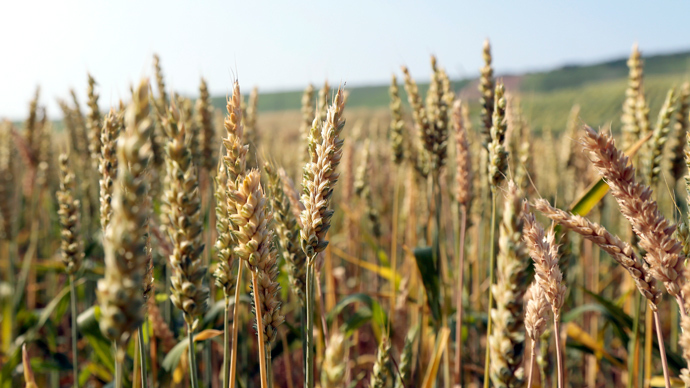
After authorities found GMO wheat growing on the field of an Oregon farmer, they were hoping to quickly trace the origin of the crop. Three months later, though, investigators are even more puzzled than before.
A farmer in Oregon discovered in May that a GMO wheat crop manufactured by biotech company Monsanto and discontinued years earlier had mysteriously sprouted in his field. But after an array of testing was waged from the United State Department of Agriculture and others, it’s still uncertain months later where the crop came from.
A Monsanto-made GMO wheat strain was tested on the field between 1998 and 2005 before the St. Louis, Missouri-based agro-giant withdrew its application from the USDA’s regulatory approval process. By that point, though, it had spent seven years planting a particular strain of wheat that could withstand exposure to Monsanto’s own “Roundup” pesticide. When an Oregon farmer realized two months ago that some plants in his wheat field were surviving despite dousing them with Roundup, he became suspicious. Soon after the USDA did too, even launching a federal investigation.
The zombie crop raised concern around the world when foreign buyers of US goods objected over possibly buying a harvest infected with hybrid seeds unapproved of overseas. Monsanto Chief Technology Officer Robb Fraley went on to call the entire incident “suspicious” and generated calls of potential sabotage, but even still the mystery remains unsolved.
The result, NPR reported this week, could mean hundreds of millions of dollars if Asian buyers exit from contracts with American farmers.
Weighing in weeks after he touted the possibility of the incident being the result of sabotage, Fraley still seemed unsure. “The fact pattern indicates the strong possibility that someone intentionally introduced wheat seed containing the CP4 event into his field, sometime after that farmer initially planted it,” Fraley told NPR, referring to Monsanto’s patented Roundup resistance gene
Fraley also said that anti-GMO activists upset with his company could have orchestrated it to discredit the company. Monsanto was in fact the focus of a day of international protests earlier this year held by GMO activists on six continents, and like-minded advocates continue to petition against Washington’s ties to the biotech industry.
“There are folks who don’t like biotechnology and who would use this as an opportunity to create problems,” Fraley previously told reporters.
But as the investigation remains unresolved, the entire incident may unfold to be nothing more than an honest mistake. Oregon State wheat breeder Bob Zemetra told NPR that Fraley’s claim seemed a bit of “a stretch” and suggested it was something much simpler.
“Or you have a bag that gets mislabeled and gets put on the shelf and just sits there,” he said. Others, like Oregon State University weed scientist Carol Mallory-Smith, say it really could be anything.
“There are so many places in the system where errors can be made,” she told Nature. “Once we release these genes into the field, we should just assume that they are going to stay in the environment.” “We may never know who actually released it,” added Washington State University Director of Agricultural Research James Moyer.