
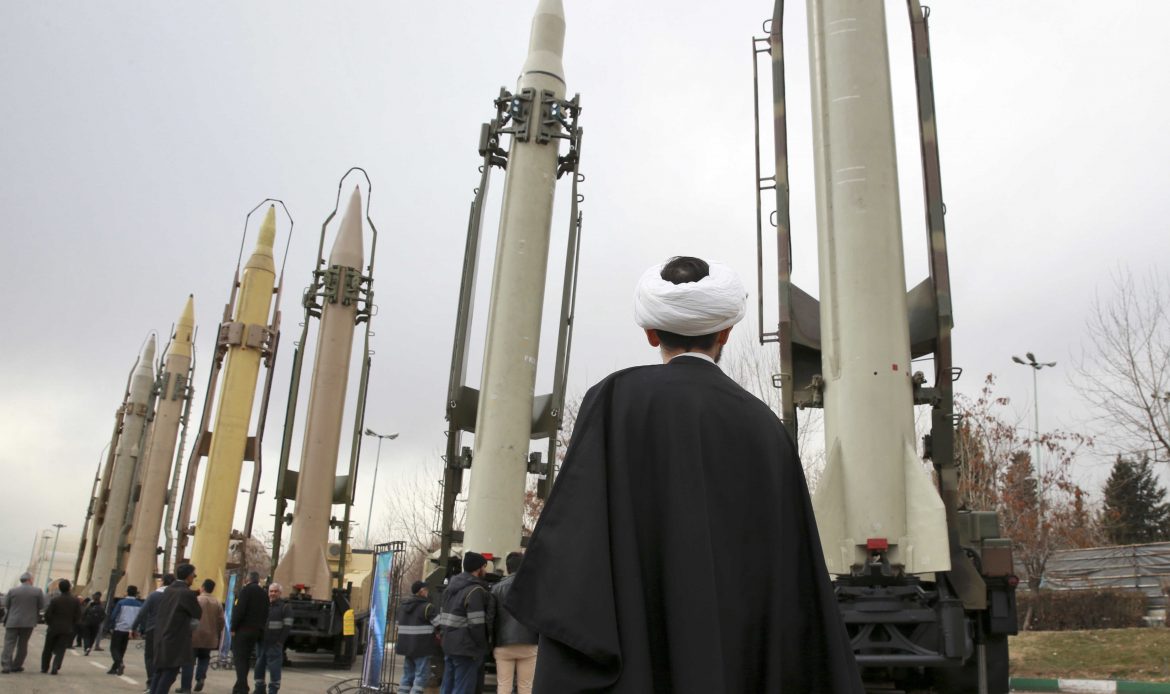
The Trump White House has accelerated a secret American program to sabotage Iran’s missiles and rockets, according to current and former administration officials, who described it as part of an expanding campaign by the United States to undercut Tehran’s military and isolate its economy.
Officials said it was impossible to measure precisely the success of the classified program, which has never been publicly acknowledged. But in the past month alone, two Iranian attempts to launch satellites have failed within minutes.
Those two rocket failures — one that Iran announced on Jan. 15 and the other, an unacknowledged attempt, on Feb. 5 — were part of a pattern over the past 11 years. In that time, 67 percent of Iranian orbital launches have failed, an astonishingly high number compared to a 5 percent failure rate worldwide for similar space launches.
The setbacks have not deterred Iran. This week, President Hassan Rouhani singled out Tehran’s missile fleets as he vowed to “continue our path and our military power.”
The Trump administration maintains that Iran’s space program is merely a cover for its attempts to develop a ballistic missile powerful enough to send nuclear warheads flying between continents.
Hours after the Jan. 15 attempt, Secretary of State Mike Pompeo noted that Iran’s satellite launchers have technologies “virtually identical and interchangeable with those used in ballistic missiles.”
Mr. Pompeo is in Warsaw this week with Vice President Mike Pence to lead a meeting of 65 nations on encouraging stability in the Middle East, including by expanding economic sanctions against Iran. It is largely an appeal to European allies who, while continuing to oppose President Trump’s decision to abandon the 2015 nuclear accord with Iran, also agree that the missile tests must stop.
The launch failures prompted The New York Times to seek out more than a half-dozen current and former government officials who have worked on the American sabotage program over the past dozen years. They spoke on the condition of anonymity because they were not authorized to publicly discuss the covert program.