
 By Jethro Mullen
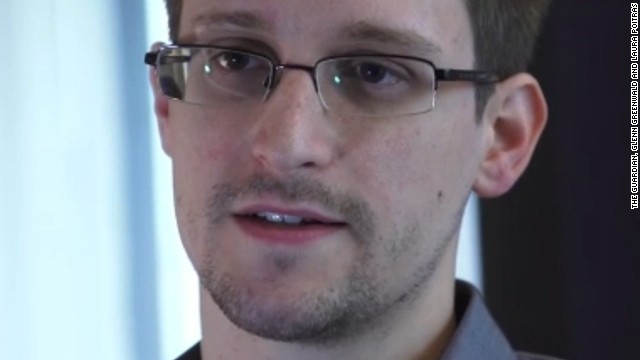
U.S. intelligence agents have been hacking computer networks around the world for years, apparently targeting fat data pipes that push immense amounts of data around the Internet, NSA leaker Edward Snowden told the South China Morning Post on Wednesday.
Among some 61,000 reported targets of the National Security Agency, Snowden said, are hundreds of computers in China — which U.S. officials have increasingly criticized as the source of thousands of attacks on U.S. military and commercial networks. China has denied such attacks.
The Morning Post said it had seen documents provided by Snowden but was unable to verify their authenticity. The English-language news agency, which operates in Hong Kong, also said it was unable to independently verify allegations of U.S. hacking of networks in Hong Kong and mainland China since 2009.
Snowden told the paper that some of the targets included the Chinese University of Hong Kong, public officials and students. The documents also “point to hacking activity by the NSA against mainland targets,” the newspaper reported.
The claims came just days after U.S. President Barack Obama pressed Chinese President Xi Jinping to address cyberattacks emanating from China that Obama described as “direct theft of United States property.”
Snowden’s allegations appear to give weight to claims by some Chinese government officials that the country has been a victim of similar hacking efforts coming from the United States.
His claims came as Gen. Keith Alexander, the National Security Agency chief, testified at a U.S. Senate hearing that the country’s cyberinfrastructure, including telephones and computer networks, is somewhat vulnerable to attack.
On a scale of one to 10, “our critical infrastructure’s preparedness to withstand a destructive cyberattack is about a three, based on my experience,” he said.
In the Morning Post interview — published one week after the British newspaper The Guardian revealed the first leaks attributed to Snowden — he claimed the agency he once worked for as a contractor typically targets high-bandwidth data lines that connect Internet nodes located around the world.
“We hack network backbones — like huge Internet routers, basically — that give us access to the communications of hundreds of thousands of computers without having to hack every single one,” the newspaper quoted him as saying.
A “backbone” is part of the inner workings of a computer network that links different parts of that network. It is used to deliver data from one part of the network to another and, as such, could expose data from multiple computers if hacked.
Snowden, 29, worked for the Booz Allen Hamilton computer consulting firm until Monday, when he was fired after documents he provided to journalists revealed the existence of secret programs to collect records of domestic telephone calls in the United States and the Internet activity of overseas residents.
While he has not been charged, the FBI is conducting an investigation into the leaks, and he has told The Guardian that he expects the United States will try to prosecute him.
Snowden told the Morning Post that he felt U.S. officials were pressuring his family and also accused them of “trying to bully” Hong Kong into extraditing him to prevent the release of more damaging information.
He vowed to resist extradition efforts if it comes to that, saying he “would rather stay and fight the United States government in the courts, because I have faith in Hong Kong’s rule of law.”
“My intention is to ask the courts and people of Hong Kong to decide my fate,” the South China Morning Post quoted Snowden as saying. “I have been given no reason to doubt your system.”
But Hong Kong lawmaker Regina Ip, a former secretary of security for the territory, said Tuesday that while any extradition process could take months, Snowden isn’t necessarily beyond the reach of the United States.
“If he thought there was a legal vacuum in Hong Kong which renders him safe from U.S. jurisdiction, that is unlikely to be the case,” she said.
The newspaper said Snowden has been hiding in undisclosed locations inside the semi-autonomous Chinese territory since checking out of his hotel room Monday — a day after he revealed his identity in an interview with The Guardian.
Snowden told the Morning Post he is not trying to evade U.S. authorities.